


Game of Sky
3.7182.00 Reviews
App Specs
- Version
- 3.9.3
- Updated On
- License
- Free
- Downloads
- 100,000+
- Developer
- IGG.COM
- Categories
- Strategy
- Platform
- Android
Screenshots
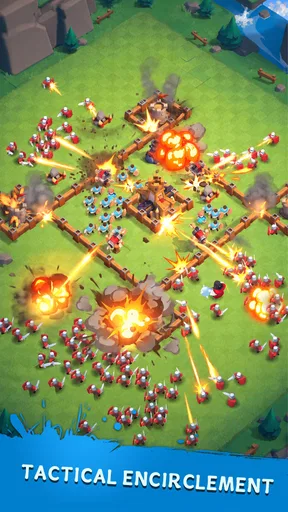
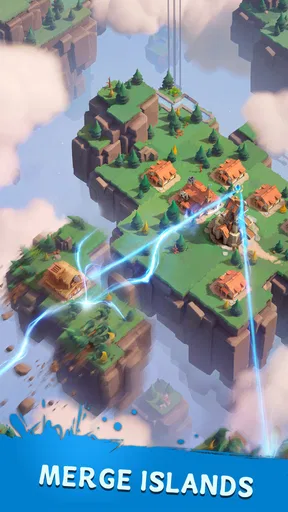
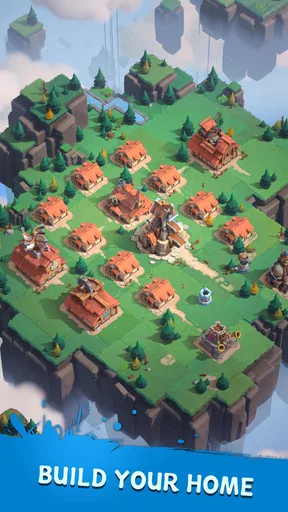
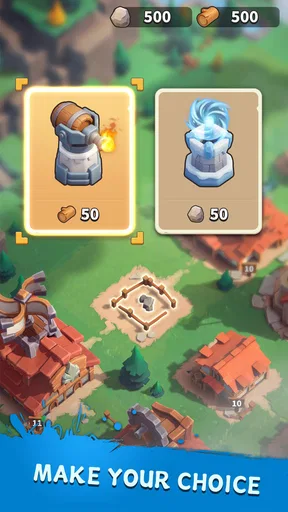
 Analysis by AppCompare
My first few sessions with Game of Sky gave me a clear impression of a strategy game that wants to feel adventurous before it asks me to think like an administrator. The central idea is easy to grasp: I take an airship into a bright fantasy world, face enormous creatures, and expand a kingdom suspended above the ground. That combination gives the game a stronger identity than a standard settlement builder, even though much of the appeal still depends on familiar strategy routines.
It is a free game from IGG.COM, aimed at Teen players, and it runs on Android devices using version 5.1 or later. The current version is 3.9.3. I found the basic presentation approachable, but the game is not designed as a tiny distraction that I can fully understand in a minute. It gradually introduces its setting, its battles, and its kingdom-building layer, so the opening feels more like the beginning of a long campaign than a quick arcade tutorial.
The first thing I noticed was how much the floating setting changes the mood. A kingdom in the sky naturally suggests movement, discovery, and danger below the clouds. The airship is not just a decorative vehicle in the concept; it gives the game a visual reason to connect exploration and strategy. When I moved between the fantasy spectacle and the quieter business of improving my realm, the contrast helped the experience feel more like a journey than a collection of menus.
A skybound world with a readable visual language
The art direction is built around scale and color. Colossal beasts are meant to look imposing, while the kingdom and airship give me a smaller, more personal point of reference. That relationship matters because it makes the setting understandable at a glance: I am building something vulnerable in a world populated by threats much larger than my own structures.
I also liked the way the setting gives ordinary strategy actions a bit more personality. In a conventional medieval builder, upgrading a building can feel like moving through a checklist. Here, the same kind of decision is framed by a floating kingdom and an airship expedition. The fantasy layer does not remove the management work, but it gives that work a more memorable context.
The visual language is at its best when it connects the three main moods: preparation, travel, and confrontation. Preparation feels settled and deliberate. Travel implies curiosity. Encounters with giant creatures add pressure. If those moods were presented in unrelated styles, the game would feel fragmented; instead, they support the same sense of a fragile civilization trying to grow in an oversized world.
That does not mean the setting will appeal to everyone. Players who prefer grounded military strategy may find the floating kingdom too colorful or theatrical. I would also not choose this game for someone seeking a historically detailed simulation. Its priority is fantasy adventure, and the strategy systems serve that tone rather than attempting to reproduce real logistics or warfare.
Worth Reading Before You Choose

EA SPORTS FC Mobile 26 Is a Bigger Football Game, but It Takes Time

Flipboard Shows What News Apps Must Do Beyond the Feed

Switching to Android Auto Means Rethinking Your Driving Routine

Google Calendar Makes a Crowded Week Easier to Manage

Ludo King Makes the Most of the Minutes Between Plans

Baby Panda World Brings Quick Play to Modern Phones, but Its Game Library Feels Busy
One useful way to approach the presentation is to treat the kingdom as a planning board rather than only a backdrop. Before committing to an upgrade, I found it helpful to pause and consider whether I was improving immediate progress or preparing for a later expedition. That small change in mindset makes the setting feel more interactive, because the airship and the realm stop being separate attractions and start feeling like parts of one route through the game.
The large creatures also help establish stakes without requiring a grim atmosphere. Their size communicates danger quickly, but the overall world remains accessible rather than oppressive. That balance is important for a game that expects me to return repeatedly. The world can suggest risk while still feeling inviting enough for a relaxed session.
Why the setting works better than the usual fantasy backdrop
Many strategy games use castles, villages, or islands as their visual foundation. Those settings are familiar, but they can make every new title look similar from a distance. The sky kingdom gives this game a more distinctive starting point. It creates natural visual separation between the place I develop and the places I visit, which helps the game communicate its two-part structure.
There is also a practical advantage to the airborne premise: it supports a feeling of limited space and forward movement. Even when I am focused on construction, the setting reminds me that this is not simply a town waiting to become larger. It is a moving civilization with an expeditionary side. That makes decisions about growth feel more connected to the fantasy than they would in a generic settlement screen.
Still, the visual identity cannot carry the whole experience. Once the novelty of the sky kingdom settles, the quality of the game depends on whether the management and battle routines remain satisfying. The art earns my attention, but the systems have to earn my time.
Sound, pacing, and the feeling of an ongoing expedition
The sound design works best when it reinforces the change between calm management and active danger. I experienced the game as something that alternates between checking progress, making decisions, and preparing for the next challenge. That rhythm is more important than constant intensity. If every moment were loud and urgent, the kingdom-building side would lose its sense of control.
I prefer strategy games that allow short sessions without making every visit feel pointless, and this one is suited to that kind of routine. I can imagine opening it during a break, reviewing the state of the kingdom, making one or two sensible decisions, and leaving with a clear next objective. I can also spend longer with it when I want to follow the adventure more closely. That flexibility is one of its strongest practical qualities.
The pacing is not entirely relaxed, though. The game’s premise encourages forward motion, and the presence of huge beasts creates a recurring sense that preparation should lead somewhere. For me, that prevents the building layer from becoming completely passive. I am not only decorating a floating settlement; I am trying to make progress toward the next meaningful confrontation or discovery.
That rhythm can become less appealing for players who want immediate control over every outcome. Strategy games in this broad category often ask for patience, and Game of Sky is more enjoyable when I accept that progress may be divided into planning steps rather than delivered in one dramatic sequence. If I want a fast tactical match with a clean beginning and end, a traditional competitive strategy game would be a better fit.
A practical tip is to play with the sound at a level where the changes in activity remain noticeable without becoming tiring. The atmosphere benefits from audio because the airship, the creatures, and the suspended kingdom are meant to feel like parts of a living setting. At the same time, the game’s management moments are easy to follow visually, so I would not consider audio essential for understanding the basic decisions.
The pacing also affects how I judge the game’s free-to-play structure. Because the experience is designed for continued progress, I pay more attention to whether I feel pushed to hurry than I would in a one-off premium game. The free entry is attractive, but the long-term rhythm means I need to be comfortable with gradual development and with the possibility that optional purchases may become tempting as my goals grow.
What a normal play session feels like
A realistic everyday session might begin with me checking the kingdom after a busy morning. I would look at what can be improved, decide whether my resources are better spent on immediate development or future readiness, and then move toward the airship side of the game. If I have only a few minutes, I can focus on one clear task. If I have more time, I can follow the broader loop of preparing, venturing out, and returning to improve the realm.
That structure makes the game suitable for players who enjoy having a continuing project on their phone. It is less suitable for someone who dislikes games that remain active in the background of their routine. The sky setting may be the first thing that attracts attention, but the real commitment is the habit of returning to a growing kingdom and deciding what deserves attention next.
How the strategy systems fit the fantasy
The most successful part of the design is the relationship between the airship, the kingdom, and the beasts. Each element answers a different player need. The kingdom provides a place to develop. The airship gives the world direction and movement. The colossal creatures provide a visible reason to prepare. When those pieces work together, the game feels more coherent than a builder with an unrelated battle mode attached.
I found the management layer more enjoyable when I treated every improvement as preparation for a purpose. Instead of upgrading simply because an icon was available, I tried to ask what kind of progress I wanted next. Was I strengthening the foundation of the kingdom, supporting the next expedition, or simply clearing a bottleneck? This approach makes the game more thoughtful and avoids the feeling of tapping through a list without understanding the consequences.
One non-obvious trade-off is that a visually exciting objective can distract from basic development. A giant beast is naturally more memorable than a routine kingdom improvement, but chasing the dramatic goal too early may leave the supporting side of the game underdeveloped. I recommend alternating between visible adventure goals and less glamorous preparation. The result is slower in the short term, but it gives the overall loop more stability.
Another useful habit is to avoid spending every available resource as soon as it appears. In a game built around a growing realm and future expeditions, keeping a small reserve gives me room to respond when a new requirement or priority appears. This is not a claim that saving is always optimal; it is a way to avoid turning one exciting decision into several frustrating delays afterward.
The strategy is approachable, but that accessibility has a limit. Players looking for a highly granular simulation may find the systems less demanding than a dedicated 4X title. There is a difference between making meaningful choices and managing every possible variable, and Game of Sky leans toward the former. I see that as a strength for mobile play, but it also means veteran strategy players may eventually want more complexity than the game is designed to provide.
The game’s Teen content rating is worth keeping in mind for families. It is not positioned as a preschool experience, and parents should judge it alongside the child’s tolerance for fantasy conflict and ongoing in-app purchase prompts. The free price makes trying it easy, but free access does not mean the experience is entirely free of spending pressure. In-app purchases range from $0.99 to $299.99 per item, so I would set a spending boundary before handing the device to a younger player.
Where it differs from conventional alternatives
Compared with a standard city-building game, this title has a clearer adventure hook. I am not only expanding streets or optimizing a settlement; I am doing so in support of an airship-led fantasy journey. Compared with a pure tactical battle game, it gives me more reason to care about the place behind the encounters. The trade-off is that neither side may satisfy players who want the deepest possible version of that single genre.
Compared with a traditional 4X strategy game, the experience feels more immediate and less academically demanding. I would recommend it to someone who likes the idea of long-term planning but does not want a dense map covered in political systems and complicated diplomacy. On the other hand, a player who enjoys precise territory control, detailed economies, or competitive matchups may be happier elsewhere.
Compared with a casual idle builder, Game of Sky asks for more attention to the connection between development and adventure. It is not just a background progress bar that I occasionally collect. The fantasy framing gives me reasons to make choices, even if the game still benefits from the convenience of mobile-friendly sessions. That middle position is probably its most important audience clue.
For new players, I would suggest learning the relationship between the kingdom and the airship before chasing every available objective. The first attractive reward is not necessarily the best use of time. I would also resist judging the entire game from the opening minutes. Its identity becomes clearer once the visual spectacle settles and the recurring planning rhythm starts to matter.
Who will enjoy the sky kingdom, and who should pass
I think Game of Sky is a good match for players who want fantasy strategy with a strong visual premise, regular short sessions, and a continuing sense of development. It is especially appealing if the image of guiding an airship through a world of oversized creatures sounds more interesting than managing another conventional castle. The setting gives familiar decisions a little more emotional color.
I would recommend caution to anyone who dislikes free-to-play progression, recurring resource management, or games that ask for patience between major moments. The purchase range is broad enough that spending discipline matters. I would also steer competitive strategy specialists toward a game built specifically around deep player-versus-player planning if that is their main goal.
The current average rating is 3.7 from around 3,400 ratings, with 182 written reviews, and the game has passed 100,000 installs. Those figures suggest a real but still developing audience rather than an experience that has become unavoidable on every phone. I read that as a reason to try it personally instead of assuming that its fantasy presentation will suit everyone.
It is free to start, which lowers the risk of testing the opening loop. My advice is to decide early what kind of player you are going to be. If you are comfortable progressing without buying anything, treat optional purchases as conveniences rather than requirements. If you know that visible delays or attractive bundles will frustrate you, the game may become stressful even though downloading it costs nothing.
My final view after settling into its rhythm
Game of Sky succeeds because its art direction and setting give the strategy loop a recognizable mood. The floating kingdom, the airship, and the enormous creatures belong to the same imaginative space, while the pacing lets me move between quiet planning and more dramatic goals. The result is not a revolutionary strategy system, but it is a well-defined mobile fantasy experience with a reason to exist beyond familiar menus.
Its limitations are equally clear. The management side may not be deep enough for dedicated grand-strategy players, and the free-to-play structure requires sensible boundaries. The game also asks me to enjoy gradual progress; anyone seeking fast, self-contained matches should look at more focused alternatives. Those are not minor details, because they determine whether the attractive setting becomes a lasting reason to return or simply an appealing first impression.
For me, the best way to play is to let the atmosphere guide the pace without allowing it to replace planning. I enjoy the airship most when it gives purpose to kingdom improvements, and I enjoy the kingdom most when it makes the next expedition feel earned. The strongest reason to try it is the way its skybound mood turns familiar strategy routines into a more personal adventure.
Released on October 9, 2024, this strategy game is still easy to approach through its free entry point, and the latest version keeps its central identity focused on building, traveling, and facing oversized threats. I would recommend Game of Sky to a friend who wants a colorful fantasy project to revisit throughout the day, provided that friend is happy with gradual development and careful spending. I would not recommend it to someone demanding a deep simulation or a purely tactical contest. For the right player, though, the suspended kingdom has enough atmosphere and structure to make returning feel worthwhile.
Pros
- Beautiful fantasy visuals with detailed floating-island environments.
- Large-scale battles make alliances and teamwork feel rewarding.
- City-building systems provide plenty of goals beyond combat.
- Regular events help keep the gameplay active and varied.
- Multiple heroes offer different abilities and strategic options.
Cons
- Progress can feel slow without spending on premium resources.
- The number of menus and systems may overwhelm new players.
- Energy and timers can interrupt longer play sessions.
- Competitive rankings may favor highly active or paying players.
- A stable internet connection is required for most features.
FAQs for Game of Sky
What is Game of Sky, and what kind of gameplay does it offer?
Game of Sky is a strategy and role-playing game built around fantasy characters, kingdom development, exploration, and battles. After installing it, players typically manage resources, improve buildings, recruit or upgrade heroes, and take part in campaign missions and competitive events. The experience combines city-building and tactical combat, so it is more suitable for players who enjoy gradual progression rather than short, completely casual sessions.
Is Game of Sky free to download and play?
Game of Sky can generally be downloaded for free on supported mobile devices, but it may include optional in-app purchases. These purchases can provide resources, premium currency, character upgrades, or faster progression. You can play without spending money, although free players may need more patience when waiting for construction, upgrades, energy recovery, or event progress. Check the store listing for the latest pricing and availability details.
Does Game of Sky require an internet connection?
An internet connection is usually required for Game of Sky because much of its content depends on online accounts, synchronized progress, live events, updates, and interactions with other players. The game may not function correctly in airplane mode or with an unstable connection. Before downloading, make sure your device has reliable Wi-Fi or mobile data, especially if you plan to participate in competitive or alliance-based activities.
Is Game of Sky suitable for children and younger players?
Parents should review the age rating and privacy information shown on the official Google Play or App Store page before allowing a child to play. Although the game uses colorful fantasy visuals, it may include combat, advertising, chat or social features, and optional purchases. If children use the app, it is advisable to enable parental controls, restrict in-app purchases, and supervise communication with other players.
Does Game of Sky work well on older Android and iOS devices?
Performance depends on the device model, operating system, available storage, and memory. On newer phones and tablets, the game should generally provide smoother loading and more stable graphics, while older devices may experience longer loading times, reduced visual quality, overheating, or occasional slowdowns. Before installing, check the current system requirements in the official store and keep enough free storage for updates and additional game data.


